
Introduction
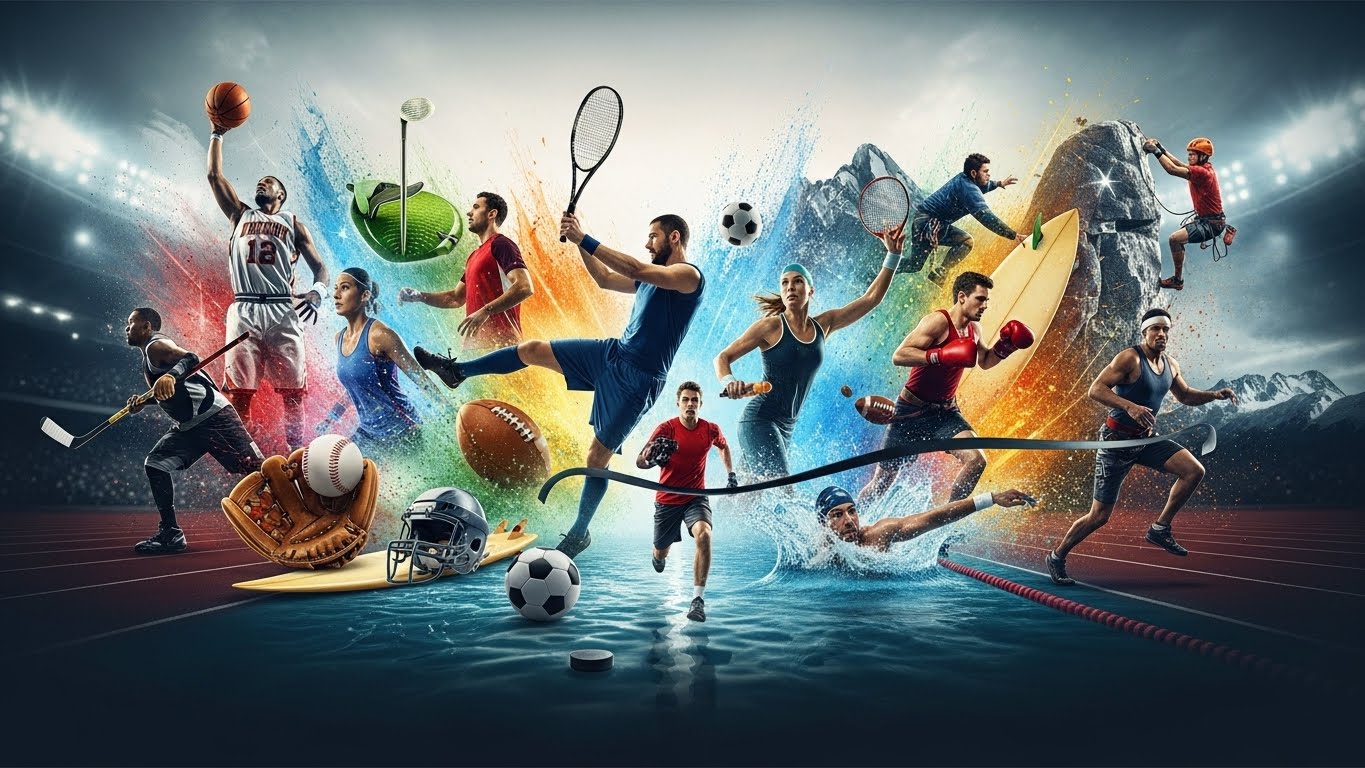
Sports have always been an inseparable part of human civilization. From the ancient arenas of Greece to the modern stadiums that echo with the roars of millions, sports represent more than physical activity or competition—they are a symbol of unity, passion, perseverance, and human excellence. They mirror the essence of who we are as individuals and as communities striving for greatness. Throughout history, sports have shaped societies, inspired generations, and built bridges where politics and ideologies often fail. Today, they are not only a source of entertainment but also a vehicle for education, diplomacy, and social transformation.
In this exploration, we dive into the fascinating world of sports—its origins, cultural influence, psychological value, and the way it continues to redefine humanity’s limits. From the ancient traditions of athletic contests to the billion-dollar global industry it has become, sports remain a reflection of human evolution itself.
The Historical Roots of Sports
The roots of sports reach deep into ancient human life. Long before stadiums, medals, or organized teams existed, physical contests were part of survival and ritual. Early humans used their physical skills for hunting, protection, and endurance, and as societies developed, these actions transformed into organized displays of strength, speed, and skill. The earliest recorded sports date back thousands of years, with artifacts and cave paintings revealing scenes of wrestling, running, and archery in ancient Egypt, Greece, China, and Mesopotamia.
The ancient Olympic Games of Greece stand as one of the earliest and most celebrated symbols of organized sport. Founded in 776 BCE, the Olympics were not just athletic contests—they were cultural festivals that honored the gods and united city-states in peaceful competition. Athletes competed for glory and recognition, representing the spirit of harmony and excellence. Similarly, ancient China’s martial arts traditions, Egypt’s ball games, and the Mayan ball courts of Central America all highlight how sports were deeply intertwined with cultural, spiritual, and social values.
As time progressed, sports evolved alongside human societies. The Romans popularized gladiatorial contests and chariot races, while medieval Europe saw the rise of jousting and fencing. By the time of the Renaissance, sports began to take on more structured forms, paving the way for the modern rules and organizations that govern them today. The industrial revolution further accelerated this process by allowing sports to become a form of recreation accessible to the masses. What began as simple human contests became organized institutions that defined national pride and identity.
The Rise of Modern Sports
The 19th and 20th centuries marked a turning point in the evolution of sports. Industrialization, urbanization, and improved communication transformed leisure into a global phenomenon. Organized sports clubs, leagues, and international competitions emerged, bringing structure, professionalism, and recognition to various disciplines. England played a central role in the modernization of sports, formalizing the rules of football, cricket, and rugby—games that would later spread across continents.
The revival of the Olympic Games in 1896 symbolized the modern world’s renewed interest in athletic excellence. Under the vision of Pierre de Coubertin, the Olympics became an international platform promoting peace, sportsmanship, and unity. Sports transcended local boundaries, becoming a universal language that people from every nation could understand. The 20th century saw the rise of sports icons who defined eras—athletes like Jesse Owens, Pelé, Muhammad Ali, and Michael Jordan became more than champions; they became symbols of hope, equality, and inspiration.
The media revolution, particularly television, brought sports into every home. Spectators no longer needed to be in stadiums to witness history—they could feel the adrenaline, see the sweat, and celebrate victories from their living rooms. Broadcasting transformed sports into one of the most powerful industries in the world. The FIFA World Cup, the Olympics, and other global tournaments became spectacles that united billions. With commercialization came sponsorships, endorsements, and the creation of global sports stars who influenced fashion, politics, and culture.
Sports as a Universal Language
One of the most profound aspects of sports is its ability to transcend language, race, religion, and nationality. Whether it’s a small local football match or a world championship, sports have the power to bring people together in ways few other things can. The excitement of a goal, the tension of a tie, or the thrill of a last-minute win are emotions that everyone can understand, regardless of background.
Sports diplomacy has become a valuable tool in international relations. Throughout history, sporting events have played pivotal roles in easing political tensions and fostering dialogue. The “Ping Pong Diplomacy” between the United States and China in the 1970s is a classic example of how a simple game opened doors to major diplomatic breakthroughs. Similarly, the Olympics have often been seen as opportunities for countries to set aside conflicts and celebrate shared humanity, even amid global uncertainty.
At a grassroots level, sports build community. They teach teamwork, discipline, and respect—values essential for peaceful coexistence. A child kicking a ball in a rural village shares the same joy as a professional athlete on the world stage. Sports remind us that while we may come from different places, we are united by our shared love for competition, improvement, and play.
The Psychological and Social Impact of Sports
The psychological benefits of sports are immense. Participation in sports builds confidence, enhances self-esteem, and teaches individuals how to manage pressure, failure, and success. In an age where mental health is a growing concern, sports serve as an outlet for stress relief and emotional expression. The physical exertion releases endorphins, improving mood and overall well-being, while teamwork and competition nurture social bonds and communication skills.
Sports also teach some of life’s most valuable lessons. They show that effort matters more than talent, that perseverance conquers obstacles, and that failure is not the end but a stepping stone to growth. For young people, these lessons are vital in shaping character and resilience. Coaches, mentors, and teammates often become lifelong influences who teach empathy, leadership, and the importance of collective success over individual glory.
In the broader social context, sports act as a platform for empowerment. They challenge stereotypes, promote inclusion, and give marginalized groups a voice. Women’s participation in sports, once limited, has become a global movement for equality. From Billie Jean King’s fight for gender equality in tennis to the rise of female athletes in football, athletics, and basketball, sports have become a battleground for social justice and change. Similarly, athletes with disabilities have demonstrated extraordinary courage and ability through the Paralympic Games, proving that human potential knows no limits.
The Economic Dimension of Sports
Beyond passion and play, sports have become a colossal economic force. From ticket sales and merchandise to media rights and sponsorship deals, the sports industry generates billions annually. Major tournaments like the FIFA World Cup and the Olympic Games inject massive investments into host countries, creating jobs, boosting tourism, and stimulating infrastructure development. Stadiums, training facilities, and urban redevelopment projects often leave lasting legacies that benefit local economies.
However, this economic boom also comes with challenges. The commercialization of sports has led to debates over fairness, corruption, and the loss of traditional values. When financial gain overshadows the spirit of the game, it risks alienating fans and distorting competition. Doping scandals, match-fixing, and unethical sponsorships have occasionally tainted the image of sports. Yet, these controversies have also led to stronger regulations, transparency measures, and ethical oversight, ensuring that integrity remains central to athletic competition.
Sports also fuel related industries such as tourism, broadcasting, fitness, and fashion. The rise of sportswear brands and fitness culture has redefined modern lifestyles. Today, sports are not confined to athletes alone—they influence how people dress, what they eat, and how they live. The concept of a “sports lifestyle” has become a cultural norm, blending health, performance, and identity into a global phenomenon.
Technology and the Future of Sports
The digital age has revolutionized sports in ways unimaginable a few decades ago. Technology now influences every aspect of the game—from training and performance analysis to broadcasting and fan engagement. Advanced analytics, wearable sensors, and artificial intelligence have made coaching more scientific and data-driven. Athletes can now measure heart rate, muscle strain, and biomechanics in real-time, allowing for personalized training that maximizes efficiency and minimizes injury risk.
Virtual reality and augmented reality have transformed how fans experience sports. Viewers can now feel as if they are inside the stadium, watching the game unfold from any angle. E-sports, or competitive video gaming, have also emerged as a new frontier, blurring the lines between physical and digital competition. With millions of viewers worldwide, e-sports demonstrate how the definition of “sport” continues to evolve with technology.
Social media has further amplified the connection between athletes and fans. Platforms like Instagram, X (formerly Twitter), and TikTok allow athletes to share their stories, build brands, and inspire directly without traditional media filters. This democratization of influence has humanized athletes, making them relatable figures rather than distant celebrities. However, it has also introduced new challenges, such as online harassment, privacy concerns, and the pressure of maintaining a public persona.
As technology advances, the question of how far it should be integrated into sports remains crucial. While innovation enhances fairness through tools like VAR (Video Assistant Referee) and goal-line technology, it also raises debates about the human element of the game. Balancing precision with passion will define the future of sports in the coming decades.
The Role of Sports in Education
Education and sports have always been intertwined. Schools and universities around the world recognize the value of sports not only as physical activity but as a crucial component of holistic development. Sports in education foster teamwork, discipline, and time management—skills essential for academic and personal success. They also provide students with opportunities for scholarships, careers, and exposure to global experiences.
Physical education encourages healthy lifestyles at a young age, countering the rise of sedentary habits caused by technology and modern conveniences. It instills habits of fitness, responsibility, and balance that last a lifetime. Moreover, competitive sports at the collegiate level cultivate leadership and ambition, preparing young adults for professional challenges beyond the field.
Many of the world’s greatest athletes began their journeys through school sports programs. These platforms provide access, nurture talent, and create pathways for young people to dream. When supported by proper infrastructure, funding, and coaching, school sports can transform lives—particularly in underserved communities where opportunities are limited.
Sports and Global Identity
In the modern world, sports are more than games; they are a reflection of national identity and pride. International competitions often serve as stages for countries to showcase their strength, unity, and culture. The display of flags, anthems, and colors at global events instills a sense of belonging and patriotism. Victories are celebrated as collective triumphs, and even defeats often strengthen national solidarity.
Sports heroes become ambassadors of their nations, representing ideals that go beyond athletic ability. When Usain Bolt sprinted to glory, he carried not just Jamaica’s flag but the hopes of an entire region. When Lionel Messi lifted the World Cup trophy, it was a moment that transcended Argentina, resonating with millions around the world who admire dedication and humility. Such moments remind us that sports have the power to inspire across borders and generations.
At the same time, globalization has made sports a shared human experience. Fans from different continents support teams and players far from their homelands. A basketball fan in India cheering for an American team or a European following a Japanese athlete highlights how sports have dissolved cultural barriers. It has become a universal arena where humanity celebrates excellence in all its diversity.
The Ethical Dimension of Sports
Despite its beauty, sports are not without moral and ethical challenges. Issues such as doping, corruption, racism, and exploitation persist. Athletes, organizations, and fans must continually strive to uphold the principles of fairness, respect, and integrity. The pressure to win at any cost has sometimes led to unethical behavior that tarnishes the spirit of competition. However, ongoing reforms, education, and awareness are helping restore balance and accountability.
Racism and discrimination remain significant challenges in sports. Although progress has been made, incidents of racial abuse and inequality continue to surface. Athletes and organizations have taken strong stands against such issues, using their platforms to advocate for justice and equality. The rise of social movements within sports underscores the growing recognition that athletes are not just performers—they are voices for change.
The concept of fair play must always remain at the heart of sports. True victory lies not in dominance but in respect for one’s opponent, adherence to rules, and celebration of effort. Sportsmanship, humility, and empathy define the true spirit of competition far more than any trophy or medal.
The Timeless Human Connection to Sports
At its core, sports represent the purest form of human expression. Every game, race, or match tells a story—a story of struggle, perseverance, and triumph. Whether it’s a child’s first kick of a ball, a marathon runner crossing the finish line, or a team lifting a championship trophy, the emotions are universally understood. Sports remind us of our shared humanity, our love for challenge, and our capacity for joy.
They also symbolize the endless pursuit of improvement. Every athlete strives to be better than yesterday, every team dreams of victory, and every fan believes in the magic of the moment. This relentless pursuit of excellence mirrors the journey of life itself—full of defeats, comebacks, and unforgettable moments of glory.
In a world often divided by politics, economics, and ideology, sports stand as one of the few arenas where people can come together in unity and celebration. They offer hope when the world seems uncertain and joy when words are not enough. They remind us that while we may speak different languages, we all understand the language of the game.
Conclusion
Sports are far more than competitions; they are living stories of humanity’s strength, resilience, and creativity. From the dusty fields of ancient civilizations to the digital stadiums of today, sports have evolved but never lost their soul. They continue to inspire, heal, and unite. The cheers of the crowd, the tears of victory and defeat, and the timeless pursuit of greatness all reveal one truth—sports are an eternal reflection of what it means to be human.
As we move into an era shaped by technology and globalization, the essence of sports remains unchanged. It is about the courage to compete, the will to improve, and the grace to respect others. The world may change, but the spirit of sports—the passion, unity, and love it brings—will forever endure.