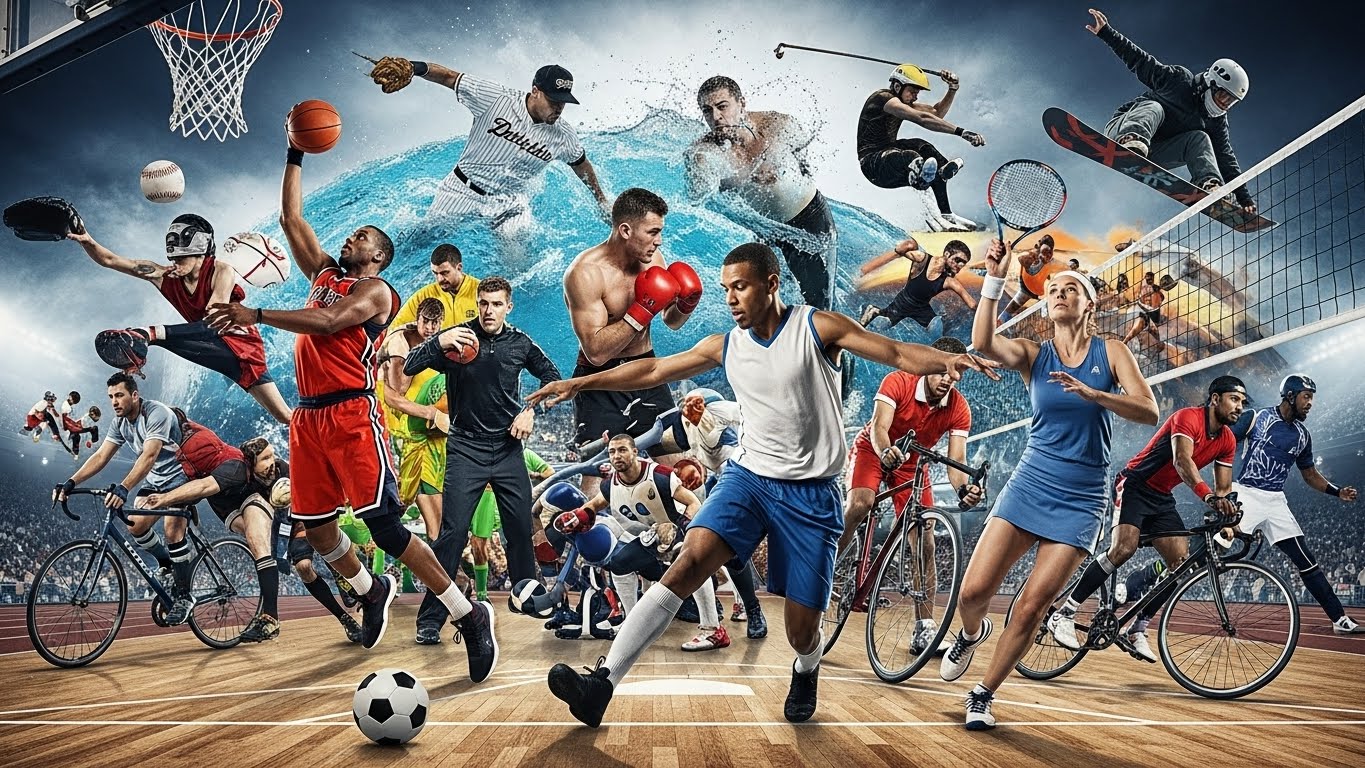

Sports have been an integral part of human culture for centuries, serving as a source of entertainment, personal growth, and social cohesion. From ancient civilizations to the modern-day Olympics, sports have evolved into an enormous global industry, transcending geographic boundaries and bringing people together like few other activities can. While the primary goal of sports is competition and recreation, their impact extends far beyond the playing field, influencing societal values, national identities, and even politics. This blog post will explore the profound role of sports in shaping culture, identity, and society, examining how they affect everything from personal well-being to global unity.
The Origins of Sports: A Deep Connection to Culture
The history of sports can be traced back thousands of years, and its roots are deeply entwined with the cultural and social fabric of early civilizations. Ancient societies used sports not only for entertainment but also as a form of training, religious observance, and community bonding.
Sports in Ancient Civilizations
The earliest recorded examples of organized sports come from ancient Egypt, Greece, and China. In ancient Egypt, there are depictions of games such as wrestling, archery, and ball games, which were enjoyed both as recreation and as demonstrations of skill and strength. The most famous ancient sporting tradition, however, is undoubtedly the Greek Olympic Games, which were held in Olympia as early as 776 BCE. The Olympic Games were not just athletic competitions but religious festivals dedicated to the gods, particularly Zeus.
In China, ancient sports such as cuju, a form of soccer-like game, and archery, were integral parts of military and cultural life. Similarly, ancient civilizations such as the Romans and the Maya also had their own unique sports traditions, each reflecting their values and society’s priorities.
The Role of Sports in Social and Religious Life
In these early societies, sports often had a dual function: they were both a form of entertainment and a way to demonstrate physical prowess, which was a key aspect of social and military status. Sports in ancient Greece, for instance, were tied to ideas of heroism, athleticism, and personal excellence. The Greek ideal of the “body beautiful” was embodied in their athletes, whose feats were celebrated as the ultimate demonstration of human potential.
Beyond physical performance, sports were also tied to spirituality and religion. The Olympic Games, for example, were considered a sacred event, and victories were believed to bring divine favor. The cultural and religious significance of sports in ancient times laid the foundation for their development as a crucial part of human society.
The Rise of Organized Sports: From Leisure to Profession
As societies advanced, the nature of sports began to shift. Sports evolved from informal, often ritualistic activities to organized, rule-based competitions. This transition marked a critical turning point in the history of sports and set the stage for their modern forms.
The Birth of Modern Sports
By the 19th century, sports in Europe began to take on a more formalized structure. The Industrial Revolution brought significant social and economic changes, leading to the formation of early sports clubs and organizations. These clubs, initially created for socializing and leisure, became the foundation for modern professional sports.
In England, the codification of sports became more pronounced. In 1863, The Football Association (FA) was established, standardizing the rules for soccer (or football, as it is known outside of the U.S.), which rapidly grew in popularity. Similarly, other sports like rugby, cricket, and tennis were formalized, and leagues and tournaments emerged. This era saw the rise of professional athletes, who began to earn a living through sports, and the concept of sports as a business took shape.
The Globalization of Sports
By the 20th century, sports had become a truly global phenomenon. The invention of the radio, followed by the television, allowed sporting events to be broadcast across vast distances, making them accessible to audiences worldwide. The Olympic Games, which had been revitalized in the late 19th century by Pierre de Coubertin, became the most significant international sporting event, bringing together nations from across the globe to compete on a common stage.
International soccer leagues, such as the English Premier League, La Liga, and Serie A, grew in prominence, attracting global fans and media attention. This period marked the beginning of sports as not just a form of entertainment, but a massive industry with global appeal, where athletes could transcend their national identities to become international stars.
The Impact of Sports on Personal Identity and Social Life
While sports play a significant role in the global landscape, their effects on individuals are just as profound. For millions of people, sports are not only a form of entertainment but also a way to connect with others, express personal identity, and develop physical and mental strength.
The Role of Sports in Personal Identity
For many, their relationship with sports is deeply personal. Whether it’s playing a favorite game in childhood, following a beloved team, or striving for athletic excellence, sports provide a sense of purpose and identity. People often identify strongly with particular teams or sports figures, and their successes or failures can become part of personal narratives. A soccer fan from Brazil, for example, might feel immense pride in the success of their national team, while an individual in Kenya may find their identity tied to the country’s dominance in long-distance running.
Sports also offer individuals the opportunity to test their limits, push beyond personal boundaries, and discover their potential. Whether it’s training for a marathon, mastering a skill in basketball, or competing in a local tournament, sports provide a sense of achievement and growth that is often unmatched in other areas of life.
The Social Aspect of Sports
Sports are inherently social, providing opportunities for people to connect with others, both locally and globally. Whether it’s playing on a team, watching a game with friends, or participating in online discussions about a sporting event, sports create a sense of community. In many ways, sports break down social, cultural, and geographical barriers, uniting individuals across diverse backgrounds.
At the community level, sports encourage physical activity and social interaction. Local clubs, schools, and amateur leagues provide individuals of all ages with opportunities to engage in team sports and recreational activities. These local sports settings often foster a sense of belonging and camaraderie, helping to build friendships and strengthen community bonds.
Sports as a Mirror of Society: Reflections on Politics, Race, and Culture
While sports are primarily seen as a form of entertainment, they also serve as powerful platforms for addressing broader societal issues. Over the years, many athletes have used their fame to speak out on important issues, ranging from racial equality to gender rights to political activism.
The Political Power of Sports
Sports have often been used as a platform for political protest and activism. One of the most famous examples is the 1968 Olympic Games, where American sprinters Tommy Smith and John Carlos raised their fists in a Black Power salute during their medal ceremony to protest racial injustice in the United States. This act of defiance sent shockwaves through the world and sparked discussions about the role of athletes in political movements.
In more recent years, athletes such as Colin Kaepernick, the former NFL quarterback who took a knee during the national anthem to protest police brutality, have continued to use their platforms to highlight social issues. These actions have often sparked controversy, but they also demonstrate how sports can be a vehicle for social change and influence public discourse.
Sports and Racial Equality
Sports have historically played an important role in challenging racial and cultural barriers. In the United States, African-American athletes like Jackie Robinson, who broke the color barrier in Major League Baseball in 1947, became symbols of the civil rights movement. Similarly, athletes such as Muhammad Ali, Billie Jean King, and Serena Williams have used their platforms to confront racism and fight for equality both within the world of sports and beyond.
At a global level, the visibility of athletes from different racial and ethnic backgrounds in top sports like soccer, basketball, and track and field has contributed to the ongoing struggle for racial equality and representation. By achieving success in their respective fields, these athletes have helped challenge stereotypes and inspire future generations.
The Future of Sports: Technology, Inclusivity, and Sustainability
The future of sports is poised to undergo significant changes as new technologies and evolving cultural norms shape the landscape. From the integration of artificial intelligence (AI) and virtual reality (VR) to the increasing push for diversity and sustainability, the world of sports is adapting to the needs and challenges of the 21st century.
Technology in Sports
Advancements in technology are already having a profound impact on sports, both on and off the field. Wearable technology is allowing athletes to monitor their performance and health in real-time, while AI is being used to analyze game strategies and player performance. Virtual reality (VR) is enabling athletes to simulate training scenarios, and fans can now enjoy immersive viewing experiences with 360-degree cameras and interactive platforms.
The increased use of analytics and big data is also changing the way teams and athletes prepare for competition. From optimizing player fitness to developing game tactics, data-driven decision-making is becoming more crucial in sports, revolutionizing the traditional approach to coaching and management.
The Call for Inclusivity and Sustainability
The sports industry is also becoming more inclusive, with greater emphasis on gender equality, accessibility, and environmental sustainability. Women’s sports are gaining more visibility, and initiatives aimed at promoting girls’ participation in sports are becoming more common. The growth of women’s soccer, basketball, and tennis is helping to break down gender barriers and create more opportunities for female athletes.